



If you’ve tried to lose weight in the past, you know that it can be a real struggle. Between extreme fad diets and intense workout programs, finding a simple, sustainable way to lose weight can feel impossible. Maybe you’ve heard that walking can help with weight loss, but you might wonder, ‘Has anyone lost weight walking 10,000 steps a day?’ This article will explore this question and provide insight into how walking helps with weight loss and overall health. You may find inspiration from real-life stories of those who have lost weight by walking. Calorie measurement and management play a significant role in weight loss. But, How Are Calories Measured?
So, if you’re looking for a simple way to lose weight, tracking your calories with a calorie tracker can help determine how walking fits your weight loss goals. Goldi AI has a great solution to help you with this: an easy-to-use calorie tracker that can help you confirm if walking can help you lose weight in a simple, sustainable way.
Can Walking 10,000 Steps Help You Lose Weight?

Some claim that individuals can lose a pound of fat a week just by taking 10,000 steps a day because of the potential to burn 3,500 calories from walking. As a general rule of thumb, a pound of fat contains around 3,500 calories.
Creating an average caloric deficit of 500 calories over 7 days equals 3,500 calories—suitable for a pound of weight loss per week. Unfortunately, that calculation of ‘10,000 steps a day = 3,500 calories burned a week’ uses a specific body type, which may not apply to you.
How Many Calories Do You Burn From 10,000 Steps?
Estimating how many calories you burn from an exercise like walking or running depends on your weight. On average, heavier people use more energy to move than lighter people. Most rough estimates revolve around 100 calories burned per mile for a 180-pound person.
How many miles are 10,000 steps? Ten thousand steps are roughly 5 miles.
Calorie Burn from 10,000 Steps
Assuming you weigh 180 pounds, then yes, by simple mathematics, 100 calories x 5 miles equals 500 calories. Over a week, that becomes 3,500 calories. But if you are lighter or heavier, you will burn fewer/more calories while taking the same number of steps or walking the same distance.
If you were 120 pounds, you would only burn 60 calories in that same mile. Calculate that over a week, which only becomes 2,100 calories, meaning you are 1,400 calories short of reaching that 3,500-calorie goal.
How Far Is 10,000 Steps: Walking Speed and Distance
Before you decide to put in the distance and time, do not forget about speed. Even if you are at that 180-pound range, the calories you burn from walking depend on your walking intensity or speed.
The average walking speed is about 3 miles per hour, and according to the Mayo Clinic, the number of calories you’ll burn depends on your walking speed.
Walking Speed & Calorie Burn
For a 180-pound person, a leisurely 30-minute walk at two mph yields a burn of 102 calories, but walk at a more moderate intensity (3.5 mph) in the same 30-minute walk, and the calorie burn increases by 54% to 157 calories.
Why? It’s simple—the faster the pace, the greater your heart rate, and the more calories you can burn covering the same distance. The sources that suggest you can average a weight loss of a pound a week from walking typically assume you walk at the pace necessary to cover the estimated 5-mile distance. If you deviate from the above conditions, your results may differ.
Your Diet Matters When Walking for Weight Loss
Even if you reach 10,000 steps, all that effort can almost entirely be irrelevant if you aren’t careful—weight loss from walking essentially assumes your caloric intake stays stable. Undoubtedly, walking leads to more calories burned throughout the day.
Without understanding your net caloric balance, walking 10,000 steps, 15,000 steps, or even 20,000 steps a day might not be enough to cause any meaningful fat loss or improvements in body composition. To achieve fat loss, you need to burn more calories than you get from your food. That’s called a caloric deficit.
Examples of Caloric Balance
For example, let’s say that you need 1,800 calories a day to maintain your current body weight, but you have a daily caloric intake of 2,300.
Assuming my 10,000 steps equal 500 calories burned (which, as shown above, is far from guaranteed), I’d only be bringing myself to a net caloric balance of zero, meaning the 10,000 steps I am taking are only helping me maintain my current weight, not lose the weight.
To better explain, let’s look at two examples.
1. No Fat Loss with Caloric Balance
For our 180-pound person they naturally burn 1,800 calories throughout the day due to their metabolism. Adding 500 calories burned from walking 10,000 steps brings the total calories burned (TCB) to 2,300.
Calories Naturally Burned (1,800) + Calories Burned from 10,000 Steps (500) = 2,300 Total Calories Burned (TCB)
Now, imagine that person has a caloric intake (food consumed) of 2,300 calories:
- 2,300 (Total Calories Burned) – 2,300 (Caloric Intake) = 0 (Caloric Balance)
A caloric balance of zero means no weight change and no fat loss.
2. Fat Loss with Caloric Deficit
Imagine if you carefully monitored your diet and kept your caloric intake at 1,800 calories daily.
2,300 (Total Calories Burned) – 1,800 (Caloric Intake) = 500 (Caloric Deficit)
With a caloric deficit from walking 10,000 steps and eating less, one can burn fat. Maintaining this for seven days could result in a one-pound weekly fat loss.
Predicting exact results requires estimating your Total Daily Energy Expenditure (TDEE) and Basal Metabolic Rate (BMR).
Here’s a summary of how to determine them:
- Test your body composition to find your Body Fat Percentage and Lean Body Mass.
- Convert your body composition results to BMR. Some body composition analysis devices provide this automatically. If not, use an online converter like the one by IIFYM.
- Multiply your BMR by 1.2 to estimate how many calories your body needs to maintain its current weight, assuming no extra exercise.
Has Anyone Lost Weight Walking 10,000 Steps a Day? 3 Stories from Real People

Dee Ucuncu, 42, weighed 17 stone at her heaviest and wore size 26 clothing after falling into a cycle of endless takeaways. Even so, after an embarrassing moment on a plane, Ucuncu decided to change.
“I went on holiday, and someone fat-shamed me in front of everyone on the plane,” the volunteer from Cambridge explains. “I was devastated. It was the most embarrassing thing in my entire life. No one had ever made a comment on my weight before, even though inside I knew I had an issue.”
Walking 10,000 Steps: A Simple Yet Powerful Change
As nasty as the comment was—and it’s never okay to comment on someone else’s body this way—Ucuncu says this was the push she needed to make lifestyle changes. She started incorporating more home cooking into her diet and walking 10,000 steps daily.
“Walking is seen as the most basic thing. It’s the most fantastic exercise you can do. It’s so underestimated,” she says.
Ucuncu’s 10,000-Step Journey
To reach the goal of 10,000 steps, Ucuncu first set a tiny target: walk to the end of the road, approximately half a mile. Over five months, she gradually built this up until she could walk 10,000 steps a day, five days a week—ultimately losing six stone in six months.
“Because you’re eating fewer calories, it flies off,” she adds. “I felt so amazing. I was so motivated.” The most fantastic moment? Fitting into a size eight. “I feel fantastic. I don’t worry about anything.”
Shifting Focus: Luz’s Journey to Reclaiming Her Life
After years of hiding her misery with her size, Luz Arteaga made some manageable lifestyle changes.
“I have been overweight most of my life. In my early teen years, I was always heavier than most of my friends. I’ve always been overweight (size 16 in high school), but I was still comfortable enough with my body. But when I was 19 years old, I started battling anxiety and stress. Food was always a form of comfort for me, but I soon realized that my eating habits had spiraled. I avoided my scale and jeans for months. Soon enough, I had gained nearly 100 pounds [7 stone 2 lbs]. I was really ashamed, and I felt that I was too far off track, so I accepted where I was. As much as I tried to laugh it off or ignore how miserable I really felt, I knew how far I was from the person I had been and even further from the person I wanted to be. I reached my heaviest weight of 329 pounds [23 stone 7 lbs] at 20 years old.”
Realizing the Impact of Weight Gain
Her first wake-up call came in 2018, shortly after turning 21, during a family trip. Being away from her usual routine made her realize how much her weight gain had affected her ability to enjoy small activities.
“Struggling to sit in small seats on planes and avoiding plastic chairs in restaurants were uncomfortable things I had to be aware of. I also would get rude comments from strangers. I completely avoided cameras because the person I saw in the photos was completely unrecognizable. I got tired of being the biggest person in the room.”
Balancing Diet and Walking
She started her journey on July 14, 2019.
“It was certainly a wake-up call that I needed, and I’m grateful for it. In the beginning of my journey, I started a low-carb meal plan and began using a food scale. Weighing my food has been the best decision ever! It helps me stay accountable and keep track of how much I’m eating. Although my diet is low-carb, I’m still able to enjoy foods I grew up with, like rice, beans, tortillas, etc., only in smaller portions. I don’t feel completely deprived of the food I love, so it’s sustainable for me. I’d say that 90 percent of my weight loss has been a result of my diet, but I make a goal of walking 10,000-12,000 steps a day.”
During her first year, she focused on improving her relationship with food and her eating habits. Moving forward, she plans to prioritize exercise and set new goals.
Motivation and Energy: Ariel Jade’s Walk to Better Health
It was June 2021, and I felt like my health was declining. Whenever I walked up the stairs, I’d pant. My stomach looked like I was four months pregnant, and I knew I needed to make a change. Walking 10,000 steps daily for 30 days—without dieting—seemed easy.
I heard about this challenge from my mom. She had set her goal of hitting 10,000 steps a day, and I watched as the pounds seemed to melt off her. I recently had a baby, which made getting rid of the fat in my stomach challenging. I wanted to do this challenge to look and feel better because I was constantly tired, and my clothes were too tight.
A 30-Day Transformation
The first week was the hardest. Walking 10,000 steps daily felt uncomfortable, and I was sore and tired. Finding the energy to cook dinner was challenging since I expended all my energy on walking.
But after only a week, I started to feel significantly more energized. I also found that I was going outside a lot more, which I enjoyed since I naturally spent a lot of time indoors.
After I completed this challenge, I noticed four things:
- My sleep improved drastically. At first, it was compromised because I wouldn’t get my steps in on time, so I’d have to walk in circles at 10:00 p.m., which meant I wouldn’t sleep until later.
- Surprisingly, I was less hungry and less likely to reach for sugary foods. I feel that I am a sugar addict. It all started ten years ago when I began working at an ice cream shop, and it all went down from there. I am shocked by how much walking suppressed my appetite for what I usually crave. Instead, I found myself eating lunch and not having a dire need to eat chocolate after, which is very unusual.
- I had more energy to play with my 3-year-old and give him attention.
- After 30 days, I also noticed that I had lost weight.
The Scale vs. Reality: A 3-Pound Difference
At first, I was worried because I didn’t feel like I was losing weight. I was still eating ice cream and potato chips, so I was surprised when, one month later, I lost three pounds. But what’s even more surprising were my before and after pictures.
You wouldn’t think three pounds would make much of a difference when looking at the scale, but these pictures are evidence that there’s more to the story than the scale alone can show.
10,000 Steps Away from a Better You
During my 30-day challenge, I also discovered the following:
- Dancing is a good way to get steps in.
- Grocery shopping does not give you as many steps as you’d think.
- Walking with other people is nice, making the experience much less painful.
I recommend this challenge to anyone who enjoys having more energy, better sleep, and wants to look and feel their best. I had my second baby not too long ago, and I have been doing this challenge yet again.
It is still 100 percent worth all of the benefits. All you need is a good pair of sneakers, and you are just 10,000 steps away from being a better you.
How Do I Work Up to Walking 10,000 Steps?
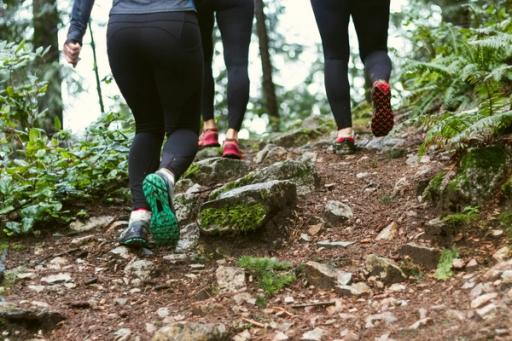
1. Measure Your Current Step Count
Before ramping up your step count, you must know where you’re starting. If you have a fitness tracker or smartphone, check if it has a built-in pedometer to track your daily steps.
If not, you can manually track your steps for a week or so to get an average. Once you have your baseline, you can set a goal to increase your step count by 1,000 steps.
2. Increase Step Count by 1,000 Steps
Once you know how many steps you take in a day, it’s time to set a goal to increase that number by 1,000 steps. This will involve walking an extra 10 to 15 minutes each day.
For example, if you average 3,000 steps daily, your first goal will be 4,000. This should take only a few days to achieve.
3. Keep Increasing Your Goal Gradually
After you reach your first goal of 4,000 steps, continue to increase your target by 1,000 steps every few weeks until you reach 10,000 steps. This progressive approach will get you to 10,000 steps in about six months if you start with an average of 3,000 steps.
4. Understand the Benefits of Increasing Step Count
Each increment of 2,000 additional steps you take roughly equals one additional mile of movement. These extra 2,000 steps represent 20 to 30 minutes of daily movement.
As you increase your step count, remember there are additional benefits to steps taken at a brisk pace—and even more benefits if that pace is held for about 10 minutes.
5. Don’t Worry About Hitting 10,000 Steps Every Day
If you can’t make it to 10,000 steps every day, don’t fret. Any increase in walking is helpful for your health.
Track Your Calories within Less Than 15 Seconds with Our Calorie Tracker App
Calorie tracking can be tedious, especially if you do it manually. Fortunately, Goldi AI is a revolutionary app that transforms calorie tracking with cutting-edge AI technology. Just snap a photo of your meal, and Goldi AI does the rest. Goldi AI combines your phone’s depth sensor with advanced AI models to:
- Analyze food volume
- Identify individual ingredients
- Instantly calculate calories, protein, carbs, and fat content
AI-Powered Nutrition
With 90 percent accuracy on visible foods and multiple tracking options, Goldi AI makes nutrition tracking effortless. Gone are the days of tedious manual logging in calorie tracking apps. Whether scanning a full meal or a quick snack, Goldi AI gives you accurate nutritional information in under 15 seconds.
The AI learns from your feedback, continuously improving its accuracy. Stay on track with personalized insights and brilliant reminders. Goldi AI simplifies achieving your fitness goals. Track your calories with your camera using Goldi AI’s calorie tracker.