



Calorie burn ranks high on most people’s lists of fitness goals. But it’s not all about aesthetics. The higher your calorie burn, the faster you can lose weight, build muscle, and boost overall health. It can also mean more flexibility in your diet. And if you can figure out how are calories measured and how to burn 1,000 calories a day, you’ll unlock a whole new fitness level! So how do you get there? This guide will explore the importance of calorie burn, the benefits of burning 1,000 calories a day, and how to do it in a way that supports your goals and keeps you healthy.
Goldi AI’s calorie tracker can help you achieve your objectives, such as effortlessly burning 1,000 calories a day, losing weight faster, building lean muscle, and feeling stronger—all while enjoying a sustainable, energizing fitness routine.
Is It Safe to Burn 1,000 Calories Per Day?

On the journey to losing weight and becoming healthier, many people get lost in the routine of it all—the mornings spent running before the sun comes up, the hours spent hammering your shoulders, legs, back, and beyond, and the evenings spent jumping rope to burn a few extra calories. Truth be told, working out is a lot easier when it doesn’t feel like work.
The Power of Perceived Exertion
Luckily, how hard you’re exercising and how hard you think you’re exercising are two different things. And the latter, called the rate of perceived exertion (RPE), might be more in your head than in your muscles. So, in theory, you can burn 1,000 calories without even realizing it.
After all, there’s a reason the treadmill’s nicknamed the “dreadmill,” and people forgo their workouts when their playlists run dry. A 2012 review published in the International Review of Sport and Exercise Psychology concluded that listening to upbeat music reduces ratings of perceived exertion, improves the body’s energy efficiency, and spurs better performances.
How to Utilize Your Rate of Perceived Exertion
That’s the true beauty of playing with your RPE. Employ a few tricks to lower it, and you can work out harder, longer, and without breaking a sweat (or at least feeling like you are). Plus, chances are, you’ll have a lot more fun while at it, explains exercise physiologist Mike T. Nelson, Ph.D., C.S.C.S. And that’s key to sticking with any workout over the long haul.
So what reduces your RPE, apart from the apparent blaring of tunes? On your next run, try looking ahead rather than all around. In a 2014 New York University study, when racers kept their eyes fixed on a target straight in front of them, they perceived the finish line to be closer and the trek easier. They also finished the course 23 percent faster than those who took in the sights.
How Perception and Enjoyment Impact Performance
Meanwhile, a hilarious study out of Northumbria University in the U.K. found that their RPE drops when guys work out in the presence of a female onlooker. The exerciser’s RPE increases when the spectator is a fellow male. So yeah, you should substitute your girlfriend as your new workout buddy.
Still, one of the easiest ways to slash your RPE and increase your fitness results is to get into activities you enjoy.
Is It Safe to Burn 1,000 Calories Per Day?
For most people, it’s unsafe to burn 1,000 calories daily through exercise. Depending on what kind of activity you do, you need to work out for over an hour to burn that many calories, and it takes a long time to build up to that level of endurance. Plus, if you do higher-intensity workouts, doing them every day without getting injured or burned out will be difficult.
Registered Dietitian Avery Zenker advises:
“In order to use 1000 calories for exercise, it’s likely not going to be a walk in the park (pun intended). There are a number of factors that impact how much each individual will burn during any given exercise. A group of people could all do the same workout but use different amounts of calories. Some factors that impact our energy/calorie expenditure include body composition (amount of fat vs muscle, etc.), height, sex, weight, and more. Certain health conditions also can increase or decrease energy expenditure.”
Balance Over Numbers
Trying to burn 1,000 calories per day also becomes problematic if you’re eating a dangerously low number of calories, as this can be a sign of an eating disorder. If you’re trying to burn a high number of calories to offset behaviors such as binge eating, you need to consult with a medical professional.
Registered Dietitian Sarah Gaginis advises:
“My concern with thinking about calories burned during exercise is that it contributes to rigidity around exercise, which can be a slippery slope for disordered eating and eating disorders. Exercise should be about enjoyment and feeling good, not counting calories. Using the number of calories burned as a goal might seem like a good motivator at first, but it can distract from other health goals and create an unhealthy relationship to exercise.”
Factors to Consider When Burning 1,000 Calories
Everyone burns calories at a different rate based on several factors, some of which are out of your control. Some considerations to take into account when trying to burn 1,000 calories include the following:
- Your gender: Men tend to burn more calories with physical activity because they generally have more muscle mass.
- Your age: As you age, you lose muscle mass, which burns more calories than fat.
- Your body weight and body fat percentage: It’s easier for more prominent individuals or those with high body fat percentages to burn more calories with exercise. They have more mass to move, and their bodies need more energy to function correctly.
- How in shape you are: Someone new to working out may burn more calories with exercise than someone with a strong fitness background. People whose bodies haven’t yet adapted to physical activity may burn more.
It’s also important to note that calorie counts on activity trackers and cardio machines can be incredibly inaccurate, so you can’t always tell exactly how many calories you’re burning. The best way to determine that number is to get a heart rate monitor, preferably one with a chest strap.
Accuracy and Key Factors
Weight is a required entry for the estimated number of calories burned. Input your weight by either connecting Apple Health (for iOS) within the app (this will use your height and weight data from Apple Health) or manually inputting your weight (for Android). Plus, if you have an Apple Watch, it will even factor in your heart rate when calculating calories.
Alternatively, a metabolic equivalent of task (MET) calculator can be used. Still, these calculators only work well if you’re very honest about how much effort you put into your workouts.
Do You Need to Burn 1,000 Calories Per Day?
Burning 1,000 calories a day through exercise is not advised. Instead, we recommend focusing on exercise that increases muscle, like resistance-training workouts, since muscle mass burns more calories than fat.
According to ACE, here’s an average of how many calories you can expect to burn during an hour-long workout doing weight training exercises:
Pace
- 100-pound person:
- Normal: 136 calories
- Intense: 272 calories
- 150-pound person:
- Normal: 205 calories
- Intense: 408 calories
- 200-pound person:
- Normal: 272 calories
- Intense: 544 calories
How Your Body Burns Calories
Remember that your body continues to burn calories while you’re at rest. This is called your basal metabolic rate (BMR), or the number of calories your body burns by performing life-sustaining functions such as:
- Heart beating
- Breathing
- Circulation
You can lay in bed, not moving for an entire day, and still burn calories.
Most people don’t spend their days that way. As such, you must also consider how many calories you burn daily through the life-sustaining functions mentioned above and your other daily activities, including working out. This is referred to as your total daily energy expenditure (TDEE). You likely already burn at least 1,000 calories per day just by existing.
Activity, Consumption, and Weight Management
Walking to and from the parking lot at work, running after your kids, cleaning the house, and exercising all contribute to your daily calorie expenditure. You likely also eat more than 1,000 calories a day. When you don’t burn off as many calories as you consume, it can lead to weight gain since you’re not expending all that extra energy.
Many tend to underestimate their calorie consumption and overestimate their activity levels, which is especially problematic when trying to lose or maintain weight. This may lead you to believe you need to burn as many calories as possible through exercise, and you’ll punish yourself with long, intense workouts.
Balance, NEAT, and Daily Movement
But the truth is, it’s not necessary to burn 1,000 calories a day through exercise alone, even if you have weight loss goals. While it can help, it requires a lot of exercise that many people either can’t handle or don’t have the time for.
Registered Dietitian Avery Zenker notes: *“There’s a common phrase: ‘You can’t out-exercise a poor diet,’ and there’s definitely some truth to it. A holistic approach that includes a balance of healthy diet, quality sleep, physical activity, and stress management helps set us up for our wellness goals better than only focusing on one part.”
So instead of slogging through grueling workouts to try to burn 1,000 calories in one shot, you’re better off burning more calories throughout your entire day. Some of the ways you can do this include increasing your non-exercise activity thermogenesis (NEAT) or ways that you move your body without exercising and getting in at least 8,000 steps per day.
How to Burn 1,000 Calories a Day

Burning 1,000 calories takes substantial effort and varies based on weight, metabolism, and activity type. For instance, a 150-pound person burns roughly 100 calories by walking for 20 minutes at a moderate pace. Increase brisk walking or light jogging speed, and double the caloric burn.
Now, imagine doing this for an hour straight. That’s the sustained effort you’ll need to burn 1,000 calories. For most, it won’t be easy. But with dedication and a plan, you can achieve it.
The Best Ways to Burn 1,000 Calories
Hiking
“You’re going to work your lower body in a way you’ll never be able to at the gym,” explains trainer Mike Donavanik, C.S.C.S. Between the constant incline (or decline if you’re headed back down the hill), varied steps, and backpack weighing you down, the leg and cardio workout equate to a massive caloric burn.
Time to burn 1,000 calories: at least 120 minutes
Mountain Biking
Mountain biking forces you to work your glutes, quads, core, and back harder than you ever will on a stationary bike. Plus, the scenery is so much better.
Time to burn 1,000 calories: at least 80 minutes
Football
Right in time for fall, football hones your speed and agility while requiring quick bursts of energy and explosive movements that burn calories and build muscle, Nelson says.
Time to burn 1,000 calories: at least 85 minutes
Kayaking
“Kayaking works your upper body and core strength all the way,” Donavanik says. “Half of your body is pretty much taken out of the equation, so now you must balance the kayak in the water while navigating and propelling yourself forward. You’re constantly pulling and pushing.” Bonus points if you can beat the current.
Time to burn 1,000 calories: at least 135 minutes
Rock Climbing
Rock-hard bodies are made scaling mountains (or walls). Rock climbing fires up every muscle in your body for a crazy burn with muscle-building benefits. Plus, the focus on grip strength can seriously improve your rowing/pulling performance in the gym, he notes.
Time to burn 1,000 calories: at least 60 minutes
Basketball
You’re doing it wrong if you stand still during a basketball game. An honest effort can keep you running intervals for hours, he says. Meanwhile, the quick directional changes work your abductors and adductors (often missed in the gym) while upping your coordination.
Time to burn 1,000 calories: at least 90 minutes
Soccer
It’s the metabolic equivalent of running sprints—but with your eye on the ball, you’d never know it. Plus, the explosive ball handling equates to even more calories torched.
Time to burn 1,000 calories: at least 80 minutes
Scuba Diving
It’s called “the lazy man’s sport,” but diving burns as many calories as jogging. That’s because apart from those calories burned swimming, your body expends significant energy to keep your body temperature up. Plus, if you’re doing a beach dive, you will burn even more calories walking down the beach to your dive spot while carrying 100-plus pounds on your back and waist.
Time to burn 1,000 calories: at least 95 minutes
Skiing
Getting down the mountain (without falling) takes some serious effort, burning 10 calories per minute. But climbing uphill is even more challenging. Uphill cross-country skiing can burn up to 25 calories every. Single. Minute.
Time to burn 1,000 calories: at least 200 minutes
Hockey
Apart from missing teeth, hockey players are known for their chiseled bodies. It’s no surprise why. “When you play hockey, it’s like you’re in a squat for the entire game,” Donavanik says. “Plus, unlike running, you need to push out laterally, so you’re getting a ton of glute, quad, and hamstring activation that you would never get in the gym.” Fire up those muscles—the biggest ones in your body—and you’ll burn more calories than you’ll know what to do with.
Time to burn 1,000 calories: at least 75 minutes
Swimming
Michael Phelps reportedly consumed 12,000 calories a day during the peak of his career. He debunked that figure in his autobiography, saying he got by on a mere 8,000 to 10,000 daily calories. You won’t swim as long or as complex as the GOAT, but swimming moderately in a lap pool or open water burns serious energy.
If you’re in a competitive or masters swim program following an interval training workout, you’ll start to burn fuel at a Phelpsian rate relative to your size, age, and work ethic. Freestyle and butterfly burn a few more calories than backstroke or breaststroke, but it’s all relative. Swimming is one of the best ways to burn calories.
Time to burn 1,000 calories: at least 95 minutes.
Standup Paddleboarding
SUP builds core strength, balance, and rotational power while improving proprioception. Some have called it the closest man can come to walking on water. Like swimming and other paddle sports, the calorie burn rate depends mainly on effort. If you’re out for a leisurely paddle to spot marine life and enjoy some time on the water, the burn rate will be slower than a paddle involving interval training, choppy seas, or paddling against the wind. Any of those factors can double the burn rate.
Time to burn 1,000 calories: at least 120 minutes.
Yard Work
Rather than move weights around an air-conditioned gym, do double duty with your workout and mulch your yard or do some landscaping. Pulling weeds and raking leaves is the equivalent of moderate exercise, and moving rocks, installing shrubs, and hauling dirt are on par with serious strength training.
Unlike most two-dimensional lifts in the gym, yard work is a better workout since it requires moving in all three planes of motion.
Time to burn 1,000 calories: at least 110 minutes.
Golf
Don’t laugh. Walking 18 holes—not using a golf cart—is equivalent to traveling 3.5 miles. Since most weekend warriors require far more than the 65 to 75 strokes per round professionals take, hackers burn more calories. They also walk farther in search of errant shots. An average round takes four hours, which is more than enough time to burn 1,000 calories.
Time to burn 1,000 calories: at least 180 minutes.
Pickleball
Sure, there’s less running involved than in tennis, but pickleball is a sport of constant motion, quick reflexes, and short bursts of energy requiring upwards of 5,000 steps per hour. You’ll burn more energy playing outside than in air-conditioned gyms, but either version of this fast-growing sport is an underrated means to burn calories.
Time to burn 1,000 calories: at least 115 minutes.
Moving Furniture
The next time you’re asked to help someone move, consider it a workout opportunity. Moving furniture and boxes requires strength, stamina, and dexterity—especially when fitting around corners and tight spaces. Unlike a gym workout, where the weight remains consistent or rises incrementally, the weight shifts dramatically throughout a move.
Time to burn 1,000 calories: at least 120 minutes.
Car Wash/Waxing
Daniel LaRusso mastered karate and made Mr. Miyagi’s antique car collection look brand new by spending hours washing and waxing cars. The rotational movements and constant bending burn calories, though you’ll need to spend as much time on the job as the Karate Kid to reach the 1,000-calorie mark, so pull the whole family’s fleet of cars out.
Time to burn 1,000 calories: at least 200 minutes.
Dancing
This can be an effective way to burn calories, especially in a packed, sweaty nightclub, assuming you’re not downing high-calorie, alcoholic beverages while busting moves. There’s a reason Broadway performers and the professionals have such lean, chiseled physiques: dancing burns calories.
Time to burn 1,000 calories: at least 150 minutes.
Volleyball
Whether played on the sand or in the gym, volleyball is a grueling, full-body endeavor involving jumping, diving, lunging, quick reflexes, and fast-twitch movements. Beach volleyball tends to be more of a calorie burn between the heat and the sand, and the greater likelihood of two-on-two play generally requires more movement.
Time to burn 1,000 calories: at least 100 minutes.
Trampolining
Don’t mistake the low-impact, childlike nature of bouncing on a trampoline as an easy activity. There’s a reason parents send kids outside to the trampoline; it burns off energy (aka calories).
A trampoline workout improves balance and flexibility and strengthens bones by forcing them to adjust to increased gravitational pull. It’s also a tremendous endorphin rush as it’s impossible not to have fun while on a trampoline.
Time to burn 1,000 calories: at least 120 minutes.
HIIT Workouts to Burn 1,000 Calories
High-Intensity Interval Training (HIIT) is one of the most efficient ways to burn 1,000 calories quickly. In just 20-30 minutes, you can burn up to 400 calories, making it an excellent option for those short on time.
Sample HIIT Workout:
- 20-second sprint, 40-second rest (8 rounds): Burns 100 calories
- Bodyweight exercises (burpees, squats, lunges): Burns 300-400 calories in 30 minutes
A HIIT cycling session for 30 minutes can burn anywhere from 390 to 690 calories. But you have to be a heavier person and pedal at close to a 20-mph pace to get to the higher end of that range. If you’re a smaller individual or don’t pedal that fast, it can take at least 90 minutes to burn 1,000 calories.
The one drawback of HIIT workouts is that you can’t sustain a high-intensity pace for very long because they require you to move at an intensity you can only maintain for a few seconds. It’s not recommended to do HIIT workouts more than two to three days per week because they are taxing on the body.
If you’re wondering how to burn 1,000 calories in 1 hour, a combination of HIIT and strength training could get you close.
Running
According to ACE, here’s approximately how long a person must run to burn 1,000 calories.
For a 100-pound person, the estimated time required is:
- At 5 miles per hour, it takes 2.8 hours.
- At 6 miles per hour, it takes 2.2 hours.
- At 7 miles per hour, it takes 1.9 hours.
- At 8 miles per hour, it takes 1.6 hours.
- At 10 miles per hour, it takes 1.4 hours.
For a 150-pound person, the estimated time required is:
- At 5 miles per hour, it takes 1.8 hours.
- At 6 miles per hour, it takes 1.5 hours.
- At 7 miles per hour, it takes 1.3 hours.
- At 8 miles per hour, it takes 1.1 hours.
- At 10 miles per hour, it takes 0.9 hours.
For a 200-pound person, the estimated time required is:
- At 5 miles per hour, it takes 1.4 hours.
- At 6 miles per hour, it takes 1.1 hours.
- At 7 miles per hour, it takes 1 hour.
- At 8 miles per hour, it takes 0.8 hours.
- At 10 miles per hour, it takes 0.7 hours.
You can burn anywhere from 11 to 17 calories per minute from running, but the exact numbers vary based on how much you weigh and how fast you run.
You weigh 150 lbs, burn 15 calories per minute, and can run a 10-minute mile. You could burn 1,000 calories by running for about 70 minutes or 7 miles. This assumes that you can maintain the same pace for all 7 miles. If your pace slows down, it will take you longer to burn 1,000 calories.
Jumping Rope
For a 100-pound person, the estimated time required is:
- At a slow pace, it takes 2.5 hours.
- At a fast pace, it takes 2 hours.
For a 150-pound person, the time required is:
- At a slow pace, it takes 1.5 hours.
- At a fast pace, it takes 1.2 hours.
For a 200-pound person, the estimated time is:
- At a slow pace, it takes 1.3 hours.
- At a fast pace, it takes 1 hour.
By jumping rope, here’s a rough estimate, according to ACE, on how long it would take to burn 1000 calories. While jumping rope takes more coordination than other cardio activities, it can be highly effective for burning calories and losing weight.
According to Healthline, a 200-pound person can expect to burn up to 241 calories by jumping rope for 20 minutes. That means to burn 1000 calories, they’d have to jump for roughly an hour and 20 minutes.
In addition to positively impacting cardiovascular health, jumping rope also helps strengthen muscles and bones. Plus, it can improve balance and coordination.
Cycling
Here’s a rough guide based on calculations from ACE on how long you’d have to cycle to burn 1000 calories.
For a 100-pound person, the time required to complete an activity at different paces is as follows:
- At 5.5 mph, it takes 5.5 hours.
- At 12-13 mph, it takes 2.8 hours.
- At 16-19 mph, it takes 1.8 hours.
For a 150-pound person, the time required is:
- At 5.5 mph, it takes 3.7 hours.
- At 12-13 mph, it takes 1.8 hours.
- At 16-19 mph, it takes 1.2 hours.
For a 200-pound person, the estimated time is:
- At 5.5 mph, it takes 2.8 hours.
- At 12-13 mph, it takes 1.4 hours.
- At 16-19 mph, it takes 0.9 hours.
If you’re cycling at a rate of 10-12mph, you can burn roughly seven calories per minute, depending on how much you weigh. If you bump the intensity to 14-16mph, you can burn up to 15 calories per minute.
Based on these numbers, you’d have to maintain a pace of 14 mph for about 65-70 minutes to burn 1,000 calories.
How Much Weight Will You Lose by Burning 1,000 Calories?
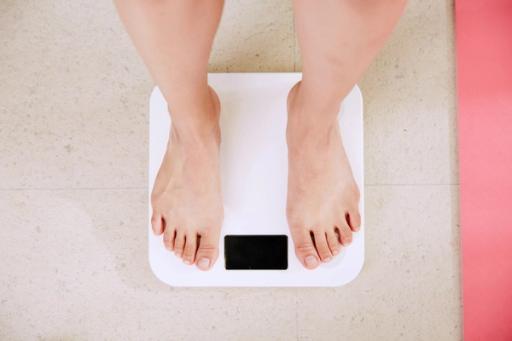
A calorie deficit occurs when you burn more calories than you consume. Your body needs energy to function, and when it doesn’t get enough from food, it turns to its energy stores for fuel. This process promotes fat loss. A calorie deficit can be achieved by reducing food intake, increasing physical activity, or both.
How Burning 1,000 Calories Daily Contributes to Weight Loss
Most experts agree you must have a 3,500-calorie weekly deficit to lose one pound. If you burn 1,000 or 7,000 calories daily, you could lose 2 lbs. weekly. It’s not that straightforward. Your rate of weight loss depends on your training age.
What Is Training Age and Why Does It Matter?
Training age refers to how many years you’ve been doing strength training. For example, a 20-year-old who has been lifting weights since 14 has a training age of 6. A 40-year-old who has been lifting weights since 39 has a training age 1. It also comes down to:
- What kind of training do you do
- How you eat
- Other genetic, lifestyle, and environmental factors
Focus on Nutrition First
Mayo Clinic Endocrinologist Dr. Michael Jensen also advises focusing on nutrition before exercise when trying to lose weight. “Having an immediate change in eating habits, and then gradually increasing your physical activity until you have a comfortable, active lifestyle is probably the best combination.”
Expect Weight Loss To Stall
To make things more complicated, your progress will eventually stall when you’re on a weight loss plan. You can only sustain a two lb./week rate of weight loss for so long. Think about it — if a 200 lb. person could lose 2 lbs./week consistently, they’d lose close to half of their body weight in a year, which is an unrealistic expectation.
Losing Weight at a Fast Rate Can Be Dangerous
Furthermore, trying to lose weight at such an aggressive rate isn’t sustainable in the long term. It can also lead to a loss in muscle mass, which is usually the opposite of what many people want.
Burning 1,000 Calories in a Single Workout Isn’t Realistic
Burning 1,000 calories in a single workout isn’t realistic for most people. Instead, breaking down your calorie burn into weekly workout sessions is more feasible.
Track Your Calories within Less Than 15 Seconds with Our Calorie Tracker App
Calorie tracking can be tedious, especially if you do it manually. Fortunately, Goldi AI is a revolutionary app that transforms calorie tracking with cutting-edge AI technology. Just snap a photo of your meal, and Goldi AI does the rest. Goldi AI combines your phone’s depth sensor with advanced AI models to:
- Analyze food volume
- Identify individual ingredients
- Instantly calculate calories, protein, carbs, and fat content
AI-Powered Nutrition
With 90 percent accuracy on visible foods and multiple tracking options, Goldi AI makes nutrition tracking effortless. Gone are the days of tedious manual logging in calorie tracking apps. Whether scanning a full meal or a quick snack, Goldi AI gives you accurate nutritional information in under 15 seconds.
The AI learns from your feedback, continuously improving its accuracy. Stay on track with personalized insights and brilliant reminders. Goldi AI makes achieving your fitness goals simpler than ever. Track your calories with your camera using Goldi AI’s calorie tracker.