

To stay on track with health goals, you need to know the calories in food. This is because, as you lose weight, your calorie needs change. So, To avoid hitting a plateau and keep progressing toward your goals, it’s best to measure calories in food at home as precisely as possible. This blog will give you valuable insights on accurately measuring calories in foods at home to help you maintain precise portion control, avoid overeating, and stay on track with health goals. But, how calories are measured.
Goldi AI’s Calorie Tracker is a valuable tool for achieving your objectives. Using this tool, you can quickly and accurately measure calories in food at home to maintain precise portion control, avoid overeating, and stay on track with health goals.
How To Measure Calories In Food At Home

Measuring calories at home helps a person better understand how food affects their metabolism. Everyone processes food differently based on various factors, including:
- Genetics
- Sex
- Age
- Health conditions
Understanding the caloric content of foods can help you make better choices that support your goals, whether losing, gaining, or maintaining weight. Tracking calories can also help people identify foods that trigger unwanted reactions in their bodies, such as inflammation or digestive distress.
How Calorie Tracking Can Help Identify Food Sensitivities and Improve Gut Health
For example, if someone is experiencing gut issues, measuring calories may help them discover that a particular food has a lot of calories and they’re eating it in excess. Further investigation may reveal that specific food, such as a grain, is contributing to their gut distress. Measuring calories can help uncover that connection.
How Calories Work
Calories are units of energy, and they come from the macronutrients in food:
- Proteins
- Fats
- Carbohydrates
Each macronutrient provides a specific amount of calories.
- Protein: 4 calories per gram
- Carbohydrates: 4 calories per gram
- Fats: 9 calories per gram
This means that you can determine the calorie content of your food by calculating the grams of each macronutrient.
Using Food Labels
One of the simplest ways to measure calories is by reading food labels on packaged products.
Here’s how:
- Check the serving size: Most labels provide the nutritional information for a specific portion of food. Ensure you adjust this based on how much you eat.
- Note the calories per serving: Multiply or divide this number depending on your portion size. For example, if a food package states that a serving of cereal is 100 calories and you consume two servings, you’re taking in 200 calories.
Using a Food Scale
For more accuracy, using a digital kitchen scale is ideal.
Here’s how to use it:
- Weigh your food before cooking: This is especially useful for raw foods like meat, grains, or vegetables.
- Input the weight into a calorie calculator or app: Apps like MyFitnessPal or Cronometer allow you to log the weight of your food and automatically calculate its calorie content.
For instance, if you weigh 150 grams of chicken breast and 100 grams of chicken provides 165 calories, you can easily calculate the calories by multiplying:
(150 ÷ 100) × 165 = 247.5 calories
Using Calorie Tracking Apps
Many apps are designed to make calorie tracking convenient. These apps usually have large food databases, making it easy to find the exact calorie content of various foods.
Here’s how to use them:
- Search or scan the food item’s barcode: Most apps allow you to scan or search by food name.
- Log homemade recipes: If you’re making something from scratch, input each ingredient, and the app will calculate the total calorie content.
These apps can even track your daily intake and give you insights into your nutrition like:
- Goldi AI
- MyFitnessPal
- Lose It!
- Cronometer
Manual Calculation Using Food Composition Tables
If you prefer to avoid apps, you can manually calculate calories using food composition tables, which provide the caloric values of various foods.
To do this:
- Find the calorie content per gram of the food.
- Multiply the weight of your food by its caloric value per gram.
For example, if you know that 100 grams of rice contains 130 calories, and you have 200 grams of cooked rice, the calculation is (200 ÷ 100) × 130 = 260 calories.
Measuring Calories for Homemade Recipes
Tracking calories for homemade meals requires breaking down the recipe into its components.
Here’s how:
- Weigh and log each ingredient. Measure ingredients like vegetables, grains, oils, and proteins separately.
- Calculate the total calorie count: Add up the ingredients’ calories to get the total for the entire dish.
- Divide by portions: If your recipe serves four people, divide the total calories by four to get the calories per serving.
For example, if a homemade lasagna has 1,200 calories and is cut into four portions, each serving has 300 calories.
Creating a Spreadsheet to Track Calories in Homemade Meals
Figuring out the calories in the dishes you prepare is like solving a simple math problem. While it may sound obvious, adding the calories of each ingredient will give you the total calories in the final dish. To help you do this, Tufts University suggests using a computerized spreadsheet.
- Start by dividing the sheet into three columns.
- In the first column, list each ingredient that goes into your recipe.
- The second column should include the amount of each ingredient that goes into the dish.
- A nutrition label calculator can be used to look up the calories in each ingredient, which can be placed in the third and final column.
The United States Department of Agriculture has compiled a comprehensive nutrition label calculator that is free to use and contains many commonly found items for cooking or baking. If you cannot find a specific item, the Calorie Control Council also has a detailed recipe calorie calculator that can be helpful and includes even more frequently purchased grocery items.
Using a Recipe Calorie Calculator
Once you have used the food calorie calculator to find each ingredient in your dish, you can add up all the calories in column three to get the total caloric content of the recipe. Organizing them in your spreadsheet should make it easy to total these numbers. If you have trouble finding a specific food item in the recipe calorie calculator, look closely at the nutritional label.
This will indicate the proper amount of calories for each food you use. Just be sure to convert the units of the amount used in your recipe to the appropriate quantity listed on the label, as they may be in different units of measurement. When this happens, use an online conversion tool to easily switch between standard measurement units and determine the calories in each food product.
Aligning Calorie Counting with Daily Intake Recommendations for Better Nutrition
By figuring out the total calories in your dish, you’ll better understand how your meal factors into your daily caloric intake. While the daily caloric recommendations for men vary from those for women, the Academy of Nutrition and Dietetics suggests that the average active adult consumes between 2,400 and 3,000 calories daily.
Calculating Calories for Recipes
Many food items have more than one ingredient, making calculating calories for these dishes more complicated.
To do this, follow these steps:
- List out all the ingredients that a dish contains.
- Write the amount of each ingredient that goes into the dish.
- Use the online tools mentioned above to know the calories of each ingredient.
- Adjust the calories in each ingredient based on the amount used in the recipe.
- Add up all the calories to calculate the total calories in the recipe.
This list will help you calculate the total calorie content of the recipe. To calculate the calories in a single serving, divide the total calories in the dish by the number of servings it contains. For example, you can cut ten slices if a one-kilogram cake contains 3000 calories.
Then, the average calorie content of the cake slice is:
3000 divided by 10 = 300. So, each slice contains 300 calories.
Calculating Calories in a Homecooked Meal
Our meals consist of three or four dishes with multiple ingredients. So, to calculate the calorie content of your meal, you will need to know the calories in each dish you eat.
Make a list of all the items in your meal.
Chicken Curry: Total Calories - 320, Calories per Serving - 160, Number of Servings - 1
Dal: Total Calories - 600, Calories per Serving - 120, Number of Servings - 1
Roti: Total Calories - 106, Calories per Serving - 106, Number of Servings - 2
Total calories in the meal: 160 + 120+ 212= 492
Substituting Ingredients for Lower Calorie Counts
After using your handy spreadsheet and recipe calorie calculator, you may have come to the unfortunate conclusion that there are many more calories in that delicious homemade meal than you realized. If true, you can lighten it up using a few simple substitutes without losing flavor.
For example, the Mayo Clinic suggests:
- Using applesauce or prune puree instead of half the butter required in a recipe.
- Fat-free half-and-half or evaporated skim milk can also replace cream in many foods.
- Raw cocoa is a good substitute for milk chocolate, while Greek yogurt makes a healthy alternative to mayo and sour cream.
- A dish’s sugar can be halved and replaced with cinnamon or vanilla extract to decrease the calories but maintain its flavor and sweetness.
Be sure to use your food calorie calculator to monitor how much the caloric content changes when you make these easy switches!
Estimating Calories Without Tools
If you don’t have access to a scale or apps, there are more straightforward methods to estimate portions:
Hand Portioning Method
You can use your hand to estimate food portions. For example:
- A palm-sized portion of protein (like chicken) is roughly 100 grams.
- A fist-sized portion of vegetables is about 1 cup.
- A thumb-sized portion of fats (like butter or peanut butter) is around 1 tablespoon.
Everyday Household Items:
Measuring cups and spoons can help estimate portions. A cup of cooked pasta or rice is typically around 200 calories, while a tablespoon of oil adds approximately 120 calories.
Tips for Accurate Calorie Measurement
Consistency is Key: Track Your Calories Daily for Accurate Results
When measuring calories at home, consistency is critical. You won’t get an accurate picture of your eating habits by tracking your calorie intake sporadically. Commit to logging your food daily. Over time, this will help you develop a clear picture of your eating habits. You may even discover some surprising patterns.
For example, you tend to eat far more calories on the weekends than during the week. Or you might uncover that one particular food—like granola or peanut butter—is the hidden culprit behind your weight loss resistance. Tracking your food can help you identify these patterns so you can make the necessary adjustments.
Use Trusted Sources to Measure Your Calories
Not all calorie counts are created equal. This is why it’s important to always refer to verified nutrition information when measuring calories at home. If you’re using an app, choose one with an extensive food database. Also, look for sources that mention the specific study or research that determined the calorie count for a particular food.
This is especially important for foods that are homemade or that you’ve prepared yourself. For example, if you’re looking up the calories for a chocolate chip cookie, it’s best to use the nutrition information from a reputable site or app instead of measuring it out on your own. After all, you could be making dozens of variations of recipes. The cookie you pulled up might not even look or taste like yours.
Portion Control: Learning to Estimate Food Serving Sizes
One of the most significant obstacles to accurately tracking food is estimating portion sizes. Most of us cannot gauge how much we’ve just eaten, which throws off our calorie and nutrient counts and ultimately impedes our progress.
You can grasp portion sizes better after just one or two weeks of regular food tracking. Gradually, you will be able to remember that a half cup of pasta is about the size of a baseball, 3 oz. of meat is comparable to a deck of playing cards, and 3 oz. of fish looks like a computer mouse. Please see the serving size guide to learn more.
Use Measuring Tools to Help You Get Accurate Calorie Counts
Utensils like measuring cups and spoons can help you understand food quantities. For example, you can pour your breakfast cereal into your regular bowl and a measuring cup to determine how much you usually eat.
I can also measure fixed amounts of some foods or drinks to see what they look like in my bowls, plates, and glasses. If I don’t have measuring cups or spoons, this is a good time to purchase them. Since many food portions are calculated by weight, a food scale can also help me familiarize myself with standard serving sizes.
Track ALL Foods to Get the Most Accurate Calorie Count
The most common mistake people make in food tracking is an incomplete or partial record. Food tracking is meant to estimate how many calories you have eaten. Omitting foods, especially many calorie-dense, small-volume ones that some people don’t even associate with “food,” will significantly underestimate your calorie intake and sabotage your weight management effort.
Don’t Forget About Cooking Oil When Measuring Calories
When cooking at home, always measure the amount of cooking oil you have added and enter it in the Food Log. You may be surprised by how many calories it contains. Most people underestimate the amount of cooking oil they use severalfold, severely impacting their perceived total calorie intake.
One tablespoon of olive oil contains 119 calories; three tablespoons contain 357 calories, equivalent to a full meal for some people.
Be Careful With Calories in Salad Dressings, Dips, and Sauces
Try fixing a salad to eat healthy, but then you reach for the dressing. If your salad is the typical size of 4 oz., it will only contain about 20 calories—a typical 2 tbsp. The dressing may contain up to 200 calories. That tiny dressing could contain 10 times the calories as your entire salad!
As with cooking oil, people often use more salad dressing than they think. The resulting calorie differences may be more than those found in a meal! So measure and track your dressing carefully. The same goes for dips and sauces.
Drinks Count Too When You Are Measuring Calories
People often forget to include their drinks when it comes to food tracking. Sodas, juices, sports drinks, and alcohol usually contain overlooked calories.
Track Your Calories within Less Than 15 Seconds with Our Calorie Tracker App
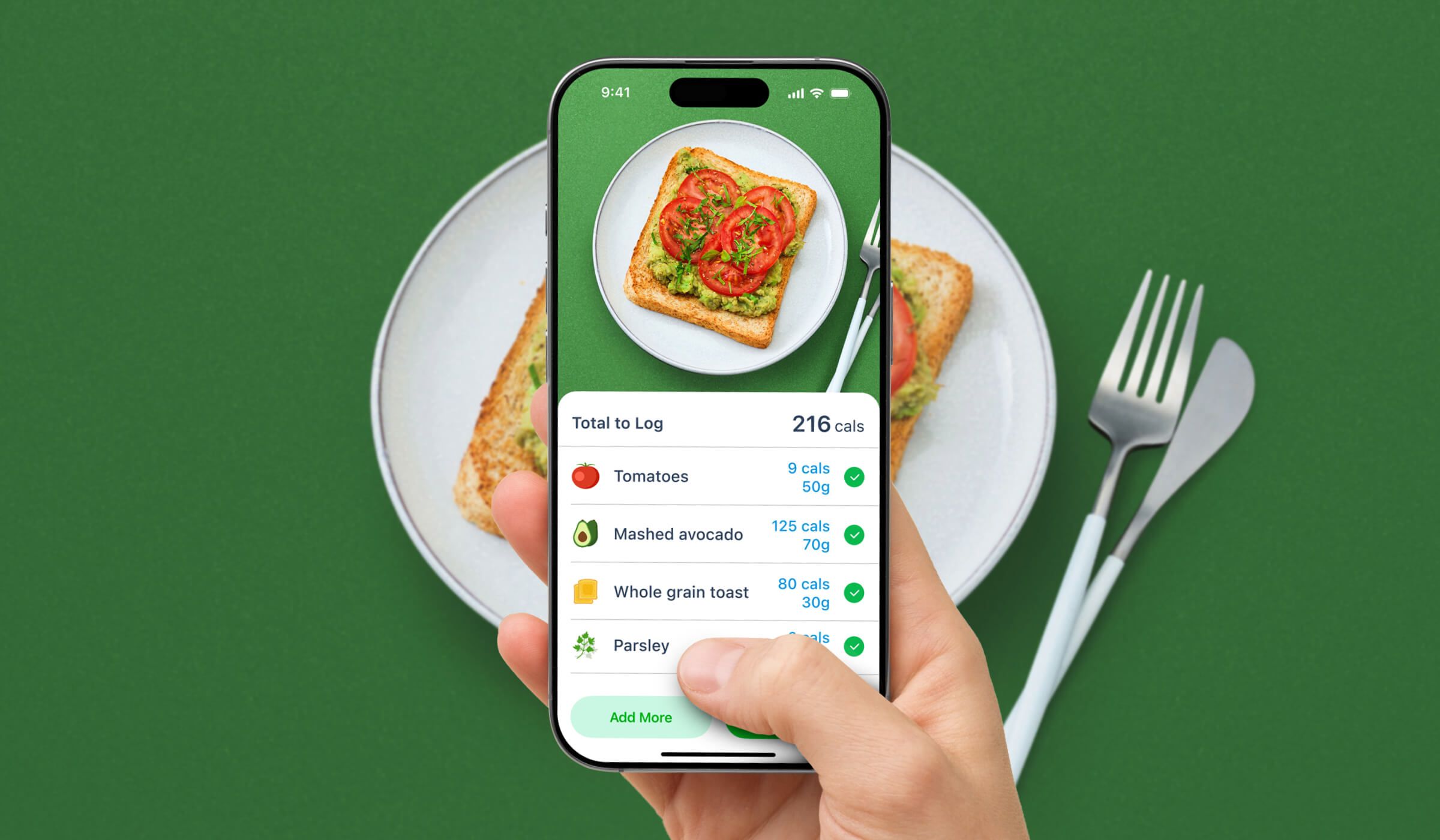
Goldi AI transforms calorie tracking with cutting-edge AI technology. Just snap a photo of your meal, and we’ll do the rest.
Our app combines your phone’s depth sensor with advanced AI models to:
- Analyze food volume
- Identify ingredients
- Instantly calculate calories, protein, carbs, and fat content.
With 90% accuracy on visible foods and multiple tracking options like:
- Barcode scanning
- Food label recognition
- Manual descriptions for complex items like smoothies
We’ve made nutrition tracking effortless. Whether you’re scanning a full meal or a quick snack, Goldi AI:
- Provides nutritional information in under 15 seconds
- Eliminates the need for tedious manual logging.
Our AI learns from your feedback to improve accuracy. It includes personalized insights and smart reminders to keep you on track. Goldi AI makes achieving your fitness goals simpler than ever. Track your calories with your camera using Goldi AI’s calorie tracker today!